Therapeutic Potential & Cellular Angiogenic Cascade of BPC-157
“BPC-157 (Body Protection Compound-157) is a stable synthetic pentadecapeptide investigated extensively for accelerated musculoskeletal soft tissue healing, VEGFR2-mediated angiogenic sprouting, collagen fibrillogenesis, and systemic gastrointestinal cytoprotection.”
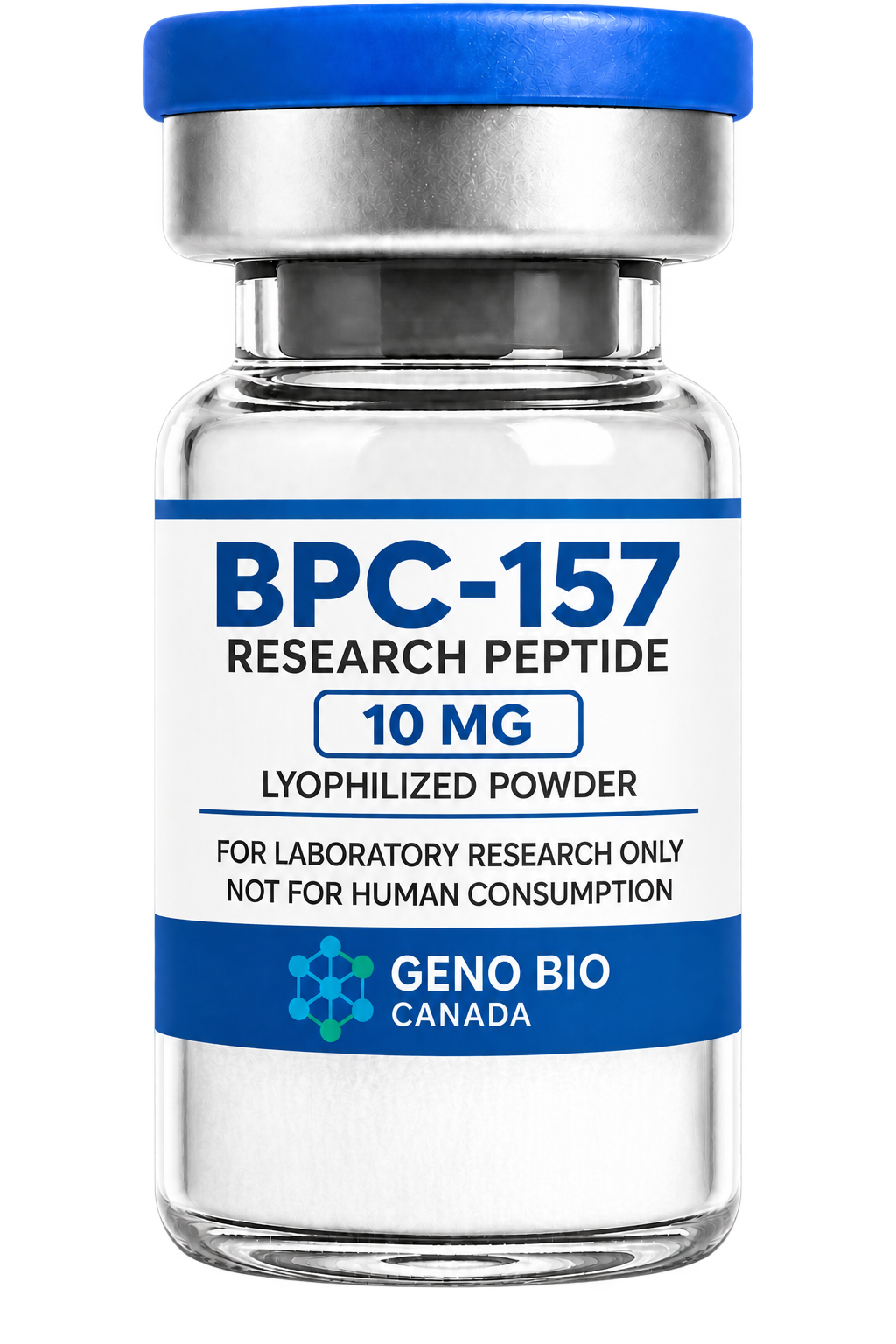
Legal & Laboratory Compliance Notice
FOR IN-VITRO LABORATORY RESEARCH ONLY: This scientific publication is provided strictly for academic and biochemical reference by certified researchers. Materials and compounds referenced are NOT for human consumption, veterinary use, drug manufacture, or direct clinical administration. Statements have not been evaluated by Health Canada or the FDA.
Scientific Research Overview
Abstract & Executive Summary
BPC-157 (Body Protection Compound-157) is a synthetic 15-amino-acid pentadecapeptide derived from a functional sequence within human gastric juice protein BPC. With a molecular mass of 1419.53 Da, BPC-157 is characterized by extraordinary thermodynamic stability, retaining structural integrity across gastric pH gradients (pH 1.0 to 9.0) and resisting degradation by pepsin, trypsin, and general tissue carboxypeptidases.
Unlike traditional growth factors (e.g., PDGF, TGF-β, bFGF) that have short biological half-lives and risk uncontrolled fibrotic scar formation, BPC-157 acts as a master regulator of early physiological repair. It coordinates cell migration, angiogenic collateralization, extracellular matrix (ECM) remodeling, and nitric oxide (NO) homeostasis without promoting abnormal oncogenic proliferation.
+----------------------------------------------------------------------------------------------------+
|                                    BPC-157 PLEIOTROPIC HEALING CASCADE                            |
+------------------------------------+----------------------------------+-----------------------------+
| Vascular / Angiogenesis            | Connective Tissue (Tendon/Muscle)| Gastrointestinal Mucosa     |
| - VEGFR2 pathway activation        | - Egr-1 gene transcription       | - Tight junction assembly   |
| - eNOS/iNOS balance stabilization  | - F-actin cytoskeletal formation | - Counteracts NSAID ulcers  |
| - Rapid collateral vessel bypass   | - Collagen Type I/III synthesis  | - Accelerates ulcer closure |
+------------------------------------+----------------------------------+-----------------------------+
Chemical Structure & Synthesis Parameters
Gly-Glu-Pro-Pro-Pro-Gly-Lys-Pro-Ala-Asp-Asp-Ala-Gly-Leu-ValGEPPPGKPADDAGLVIn-Vivo & Preclinical Research Chronology
Decades of investigations led by Prof. Predrag Sikirić at the University of Zagreb have established BPC-157’s multi-organ regenerative spectrum across standardized animal injury models:
Mechanism of Action
BPC-157 exerts its biological activity through four interconnected molecular axes:
1. VEGFR2 Pathway Activation & Angiogenic Collateral Sprouting
Angiogenesis is the prerequisite for tissue regeneration. BPC-157 directly upregulates and activates Vascular Endothelial Growth Factor Receptor 2 (VEGFR2):
2. Early Growth Response-1 (Egr-1) & Collagen Fibrillogenesis
In tenocytes, fibroblasts, and osteoblasts, BPC-157 stimulates the nuclear transcription factor Early Growth Response-1 (Egr-1):
3. Focal Adhesion Kinase (FAK) & Paxillin Phosphorylation
Cellular motility is critical for wound closure. BPC-157 stimulates the FAK-Paxillin signaling axis:
4. Bimodal Nitric Oxide (NO) System Homeostasis
BPC-157 acts as an endogenous modulator of the nitric oxide synthase (NOS) network:
Key Study Highlights
VEGFR2 Angiogenesis
Drives endothelial sprouting and rapid collateral microvascular bypass formation.
Tenocyte Collagen Matrix
Upregulates Egr-1 and collagen Type I/III synthesis, restoring tendon tensile strength.
Gastric Mucosal Stability
Demonstrates high stability in human gastric juice, healing NSAID and ethanol-induced ulcers.
Dual NOS Modulation
Regulates eNOS and iNOS balance, buffering against both ischemic and hyper-inflammatory damage.
Scientific FAQs
References
- Sikiric P. et al (2020).Stable gastric pentadecapeptide BPC 157 in trials for inflammatory bowel disease and healingCurr Pharm Des, 26(25):2991-3007
- Chang C.H. et al (2014).Pentadecapeptide BPC 157 enhances the growth hormone receptor expression in tendon fibroblastsJ Orthop Res, 32(3):478-485
- Vukojevic J. et al (2018).Rat inferior caval vein occlusion: BPC 157 rapidly bypasses occlusion and resolves thrombosisCurr Pharm Des, 24(18):1972-1983
Procure Research Reference Materials
Access laboratory-grade reference compounds with verified batch HPLC purity reports and sterility documentation.
View Compound SpecificationsLiterature Inquiries
Have questions about the pre-clinical citations or chemical parameters detailed in this research? Connect with our analytical representatives.