Selank: Neuroregulatory Heptapeptide Mechanisms, GABAergic Modulation & Brain Plasticity
“Selank (Thr-Lys-Pro-Arg-Pro-Gly-Pro) is a synthetic regulatory heptapeptide analog of tuftsin developed by the Institute of Molecular Genetics, Russian Academy of Sciences, investigated for non-sedating anxiolysis, hippocampal BDNF expression, and monoaminergic neurotransmission stabilization.”
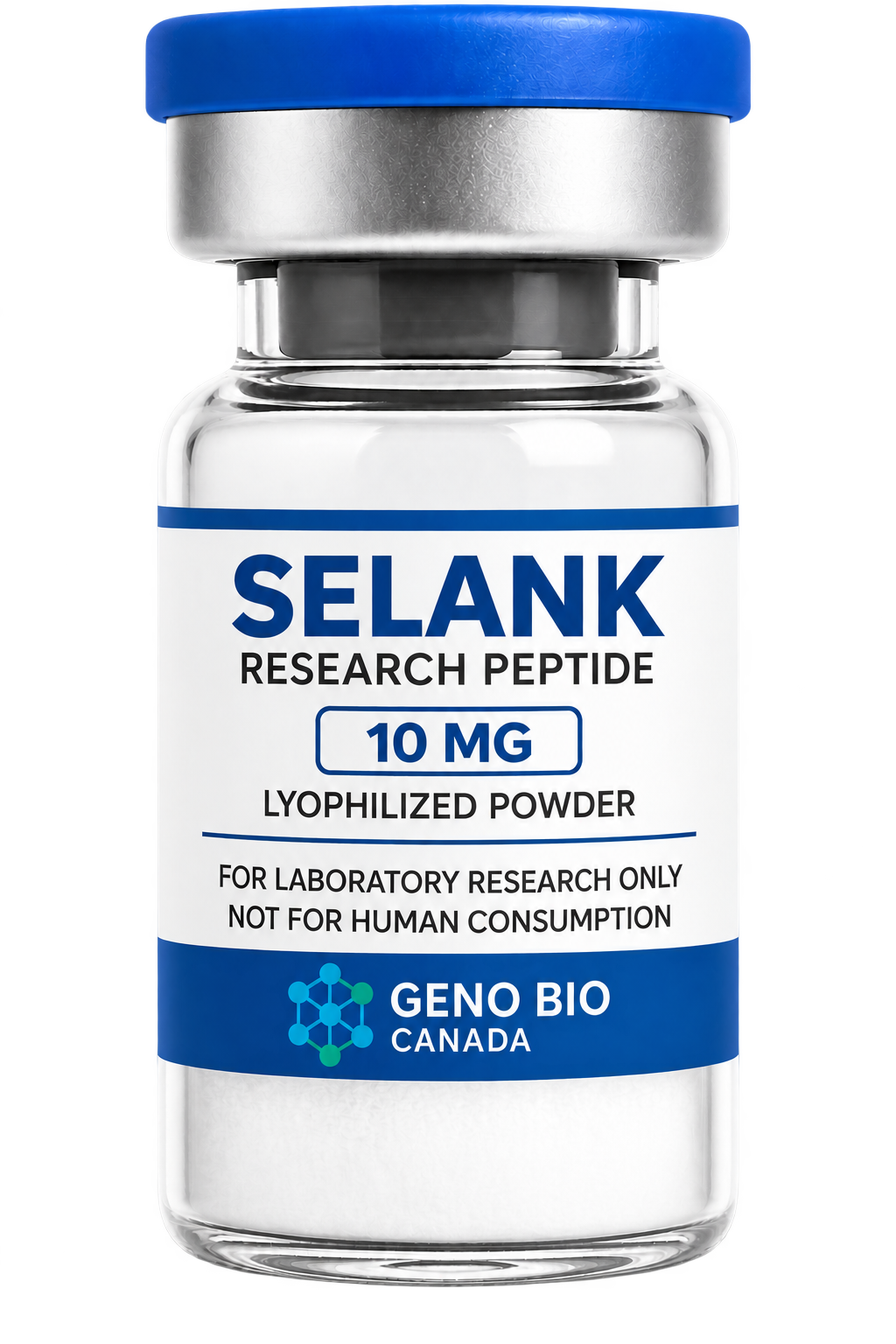
Legal & Laboratory Compliance Notice
FOR IN-VITRO LABORATORY RESEARCH ONLY: This scientific publication is provided strictly for academic and biochemical reference by certified researchers. Materials and compounds referenced are NOT for human consumption, veterinary use, drug manufacture, or direct clinical administration. Statements have not been evaluated by Health Canada or the FDA.
Scientific Research Overview
Abstract & Executive Summary
Selank (sequence: Thr-Lys-Pro-Arg-Pro-Gly-Pro, MW: 751.89 Da) is a synthetic heptapeptide developed by the Institute of Molecular Genetics and the V.V. Zakusov Institute of Pharmacology of the Russian Academy of Medical Sciences. It was engineered by coupling the endogenous human tetrapeptide tuftsin (TKPR, a peptide produced in the spleen by enzymatic cleavage of IgG heavy chain) with the stabilizing tripeptide Pro-Gly-Pro (PGP).
While classical anxiolytics (such as benzodiazepines) act as direct positive allosteric modulators of GABA_A receptors—causing sedation, muscle relaxation, memory deficits, and physical dependence—Selank operates through gene-regulatory and allosteric modulation of neurotransmitter systems, providing potent anxiolysis paired with nootropic (cognitive-enhancing) properties.
+----------------------------------------------------------------------------------------------------+
|                                      SELANK MULTI-TARGET NEURO-AXIS                                |
+------------------------------------+----------------------------------+-----------------------------+
| GABAergic Gene Expression          | Neurotrophic Plasticity (BDNF)   | Monoamine & Peptide Stability|
| - Modulates α1/β2 GABA_A subunits  | - Upregulates hippocampal BDNF   | - Regulates 5-HT / Dopamine |
| - Restores inhibitory tone         | - Activates TrkB neurogenesis    | - Inhibits enkephalinase    |
| - Zero sedation or myorelaxation   | - Enhances memory consolidation  | - Stabilizes endogenous tone|
+------------------------------------+----------------------------------+-----------------------------+
Chemical Structure & Sequence Architecture
Thr-Lys-Pro-Arg-Pro-Gly-ProTKPRPGPMechanism of Action
Selank influences central nervous system function through four primary molecular pathways:
1. GABA_A Receptor Subunit Transcriptional Modulation
Microarray and RT-qPCR studies demonstrate that Selank directly modulates the mRNA transcription of specific GABA_A receptor subunits in the hippocampus and cortex:
2. Hippocampal BDNF & TrkB Signaling Upregulation
In rodent models of memory acquisition and stress adaptation:
3. Serotonergic Turnover & Stress Buffering
Under acute or chronic stress paradigms:
4. Inhibition of Enkephalin Degrading Enzymes
Selank exhibits competitive inhibitory activity against neutral endopeptidases (enkephalinases):
Key Study Highlights
Tuftsin-Derived Heptapeptide
Engineered with a C-terminal Pro-Gly-Pro motif for superior metabolic stability.
Non-Sedating Anxiolysis
Modulates GABA_A receptor subunit expression without sedative, hypnotic, or motor side effects.
Hippocampal BDNF Upregulation
Stimulates BDNF-TrkB signaling to support synaptogenesis and long-term potentiation.
Enkephalinase Inhibition
Slows enzymatic breakdown of endogenous enkephalins, supporting emotional equilibrium.
Scientific FAQs
References
- Volkova A. et al (2016).Selank regulates the expression of genes involved in GABAergic neurotransmission in the rat hippocampusFront Pharmacol, 7:31
- Kolomin T. et al (2013).Anxiolytic-like effect of Selank and gene expression in the hippocampusNeurochem J, 7(4):273-278
Procure Research Reference Materials
Access laboratory-grade reference compounds with verified batch HPLC purity reports and sterility documentation.
View Compound SpecificationsLiterature Inquiries
Have questions about the pre-clinical citations or chemical parameters detailed in this research? Connect with our analytical representatives.