Peptide Shipping and Temperature: Does Heat Damage Peptides?
“Many researchers worry about what happens to peptides in the mail. This guide explains how temperature affects lyophilized peptides in transit, what short heat exposure means, and how Geno Bio Canada packs and ships orders across Canada.”
Legal & Laboratory Compliance Notice
FOR IN-VITRO LABORATORY RESEARCH ONLY: This scientific publication is provided strictly for academic and biochemical reference by certified researchers. Materials and compounds referenced are NOT for human consumption, veterinary use, drug manufacture, or direct clinical administration. Statements have not been evaluated by Health Canada or the FDA.
Scientific Research Overview
Abstract & Executive Summary
Temperature is the single biggest environmental factor in peptide stability. Heat speeds up chemical reactions, including the ones that degrade peptides. The key question for shipping is not whether heat matters, but how much heat, for how long, and in what form.
Risk depends on three things

  Form         ->  dry powder is far more robust than solution
  Temperature  ->  higher heat means faster degradation
  Time         ->  short exposure matters less than long exposure
Why Lyophilized Peptides Travel Well
Freeze-dried peptides contain very little water. Most degradation reactions need water or molecular movement, so in dry form they run far more slowly.
What Heat Actually Does
Higher temperatures increase the rate of oxidation, deamidation, hydrolysis and aggregation. The effect builds up over time, which is why long exposure matters more than a brief one.
Mechanism of Action
How Geno Bio Canada Ships
Full details are on the Shipping Policy page.
What to Do When Your Order Arrives
Tips for Hot Weather
Check any Geno Bio Canada lot on the Certificates page. Related reading: Peptide Storage and Stability.
Geno Bio Canada products are sold for laboratory research use only and are not for human or animal consumption.
Key Study Highlights
Dry is robust
Lyophilized peptides tolerate short transit well.
Time matters
Long heat exposure matters more than a brief one.
Packed for transit
Temperature buffering, with cold packs on Xpresspost.
Store on arrival
Move vials to the batch storage conditions promptly.
Scientific FAQs
References
- World Health Organization (2011).Model Guidance for the Storage and Transport of Time and Temperature Sensitive Pharmaceutical ProductsWHO Technical Report Series 961, Annex 9
- International Council for Harmonisation (2003).ICH Q1A(R2) Stability Testing of New Drug Substances and ProductsICH Guideline
Procure Research Reference Materials
Access laboratory-grade reference compounds with verified batch HPLC purity reports and sterility documentation.
View Compound SpecificationsRelated Peptides
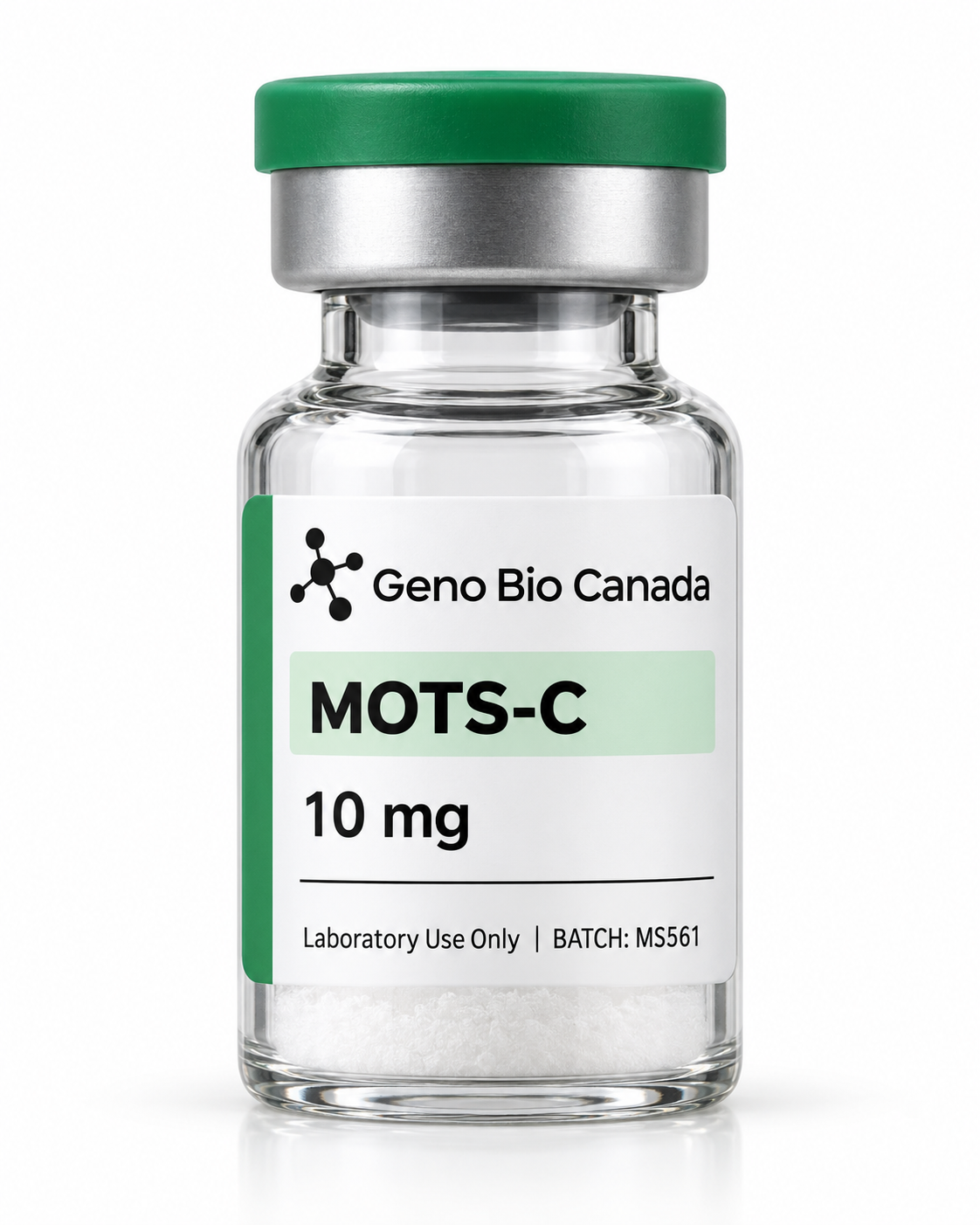
MOTS-c 10mg
MOTS-c 10mg by Geno Bio is a mitochondrial-derived research peptide supplied in lyophilized form for laboratory and analytical research applications. Studied for cellular metabolism and stress-response signaling.
View Tech SheetKorean Glutathione 1200mg
Glutathione 1200mg by Geno Bio is a research-grade tripeptide supplied in lyophilized form for laboratory and analytical applications. Intended for cellular redox balance, antioxidant systems, and oxidative-stress research.
View Tech SheetTesamorelin 10mg
Tesamorelin 10mg by Geno Bio is a synthetic growth-hormone-releasing-hormone (GHRH) analog supplied in lyophilized form for laboratory and analytical research applications.
View Tech SheetLiterature Inquiries
Have questions about the pre-clinical citations or chemical parameters detailed in this research? Connect with our analytical representatives.