NAD+ Bioenergetics: Sirtuin Regulation, Mitochondrial Function & DNA Repair
“NAD+ (Nicotinamide Adenine Dinucleotide) is an indispensable universal cellular coenzyme driving mitochondrial ATP oxidative phosphorylation, serving as the sole cosubstrate for SIRT1-7 longevity deacetylases and fueling PARP1-mediated genomic DNA repair.”
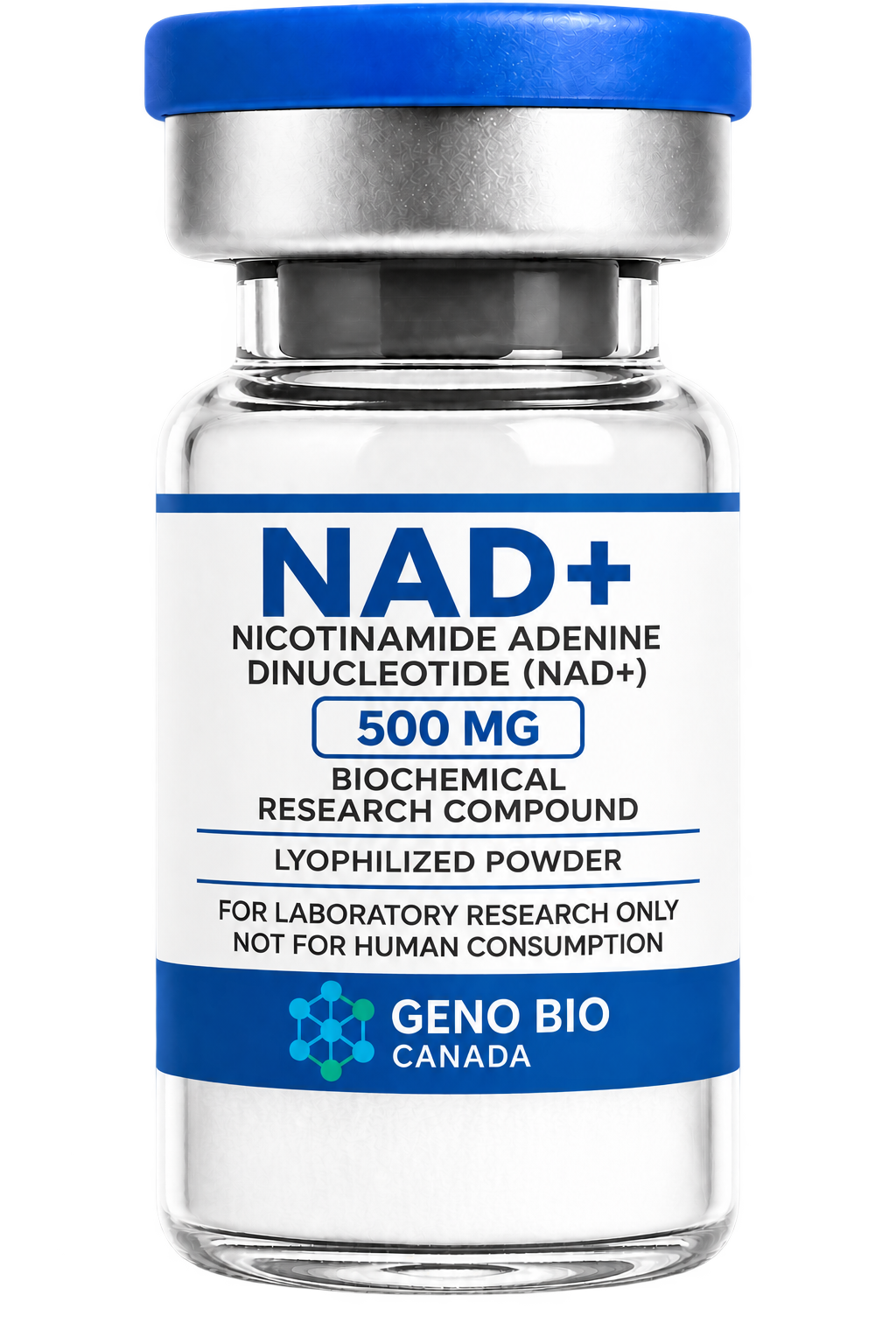
Legal & Laboratory Compliance Notice
FOR IN-VITRO LABORATORY RESEARCH ONLY: This scientific publication is provided strictly for academic and biochemical reference by certified researchers. Materials and compounds referenced are NOT for human consumption, veterinary use, drug manufacture, or direct clinical administration. Statements have not been evaluated by Health Canada or the FDA.
Scientific Research Overview
Abstract & Executive Summary
Nicotinamide Adenine Dinucleotide (NAD+) is a vital pyridine nucleotide coenzyme participating in over 500 enzymatic reactions in human physiology. It functions in two primary capacities:
* Sirtuins (SIRT1-SIRT7): Class III NAD+-dependent protein deacetylases and deacylases governing mitochondrial biogenesis, oxidative stress resistance, and circadian rhythm.
* Poly(ADP-Ribose) Polymerases (PARP1-PARP3): Enzymes that detect single- and double-strand DNA breaks and recruit repair complexes.
* Cyclic ADP-Ribose Synthases (CD38 & CD157): Ectoenzymes that regulate intracellular calcium signaling and represent the dominant driver of age-related NAD+ depletion.
+----------------------------------------------------------------------------------------------------+
|                                        THE DUAL ROLES OF NAD+                                      |
+------------------------------------+----------------------------------+-----------------------------+
| Redox Bioenergetics (Preserved)    | Sirtuin Epigenetic Regulation    | DNA Damage Repair (Consumed)|
| - Glycolysis & TCA cycle flux      | - SIRT1: PGC-1α biogenesis       | - PARP-1 detects DNA nicks  |
| - Complex I electron transfer      | - SIRT3: Mitochondrial enzymes   | - Poly-ADP-ribosylation     |
| - ATP generation via ATP synthase  | - SIRT6: Telomere maintenance    | - Recruits XRCC1/Ligase III |
+------------------------------------+----------------------------------+-----------------------------+
Molecular Structure & Biochemical Properties
The Age-Related NAD+ Deficit
During mammalian aging, tissue NAD+ concentrations drop by 40% to 60%. This decline is mediated by:
Mechanism of Action
NAD+ drives cellular homeostasis through metabolic bioenergetics and regulatory signaling:
1. Mitochondrial Electron Transport & ATP Synthesis
In the mitochondrial matrix, NAD+ is reduced to NADH by isocitrate dehydrogenase, alpha-ketoglutarate dehydrogenase, and malate dehydrogenase:
2. SIRT1 Deacetylation & PGC-1α Mitochondrial Biogenesis
SIRT1 requires NAD+ to cleave acetyl groups from target protein lysine residues:
3. PARP-1 Genome Surveillance & Chromatin Remodeling
Upon detecting genotoxic stress or reactive oxygen species (ROS) induced DNA strand cleavage:
4. SIRT3 & Mitochondrial Antioxidant Defense
In the mitochondrial matrix, the primary deacetylase SIRT3 consumes NAD+ to activate:
Key Study Highlights
Mitochondrial ATP Synthesis
Primary electron carrier required for mitochondrial Complex I oxidative phosphorylation.
SIRT1-7 Sirtuin Activation
Mandatory cosubstrate for sirtuin deacetylases regulating PGC-1alpha mitochondrial biogenesis.
PARP-1 DNA Surveillance
Fuels poly(ADP-ribose) polymerase enzymes executing rapid DNA single/double strand break repair.
Redox Homeostasis
Maintains NAD+/NADH ratio governing glycolytic and Krebs cycle metabolic throughput.
Scientific FAQs
References
- Covarrubias A.J. et al (2021).NAD+ metabolism and its roles in cellular processes during ageingNat Rev Mol Cell Biol, 22(2):119-141
- Rajman L. et al (2018).Therapeutic potential of NAD-boosting molecules: the in vivo evidenceCell Metab, 27(3):529-547
- Imai S. et al (2014).NAD+ and sirtuins in aging and diseaseTrends Endocrinol Metab, 25(11):567-576
Procure Research Reference Materials
Access laboratory-grade reference compounds with verified batch HPLC purity reports and sterility documentation.
View Compound SpecificationsLiterature Inquiries
Have questions about the pre-clinical citations or chemical parameters detailed in this research? Connect with our analytical representatives.