Lyophilized Peptides Explained: Freeze-Drying, Shelf Life and Appearance
“Most research peptides arrive as a dry powder or cake inside the vial. This guide explains what lyophilization is, how the freeze-drying process works, what a normal lyophilized peptide looks like, and how shelf life is determined.”
Legal & Laboratory Compliance Notice
FOR IN-VITRO LABORATORY RESEARCH ONLY: This scientific publication is provided strictly for academic and biochemical reference by certified researchers. Materials and compounds referenced are NOT for human consumption, veterinary use, drug manufacture, or direct clinical administration. Statements have not been evaluated by Health Canada or the FDA.
Scientific Research Overview
Abstract & Executive Summary
Lyophilization, also called freeze-drying, removes water from a frozen product without passing through the liquid phase. For peptides, it turns an unstable solution into a dry solid that can be stored and shipped far more easily.
The three stages of freeze-drying

  1. Freezing            ->  solution becomes solid
  2. Primary drying      ->  ice turns to vapour (sublimation)
  3. Secondary drying    ->  remaining bound water removed
Why Peptides Are Freeze-Dried
How the Process Works
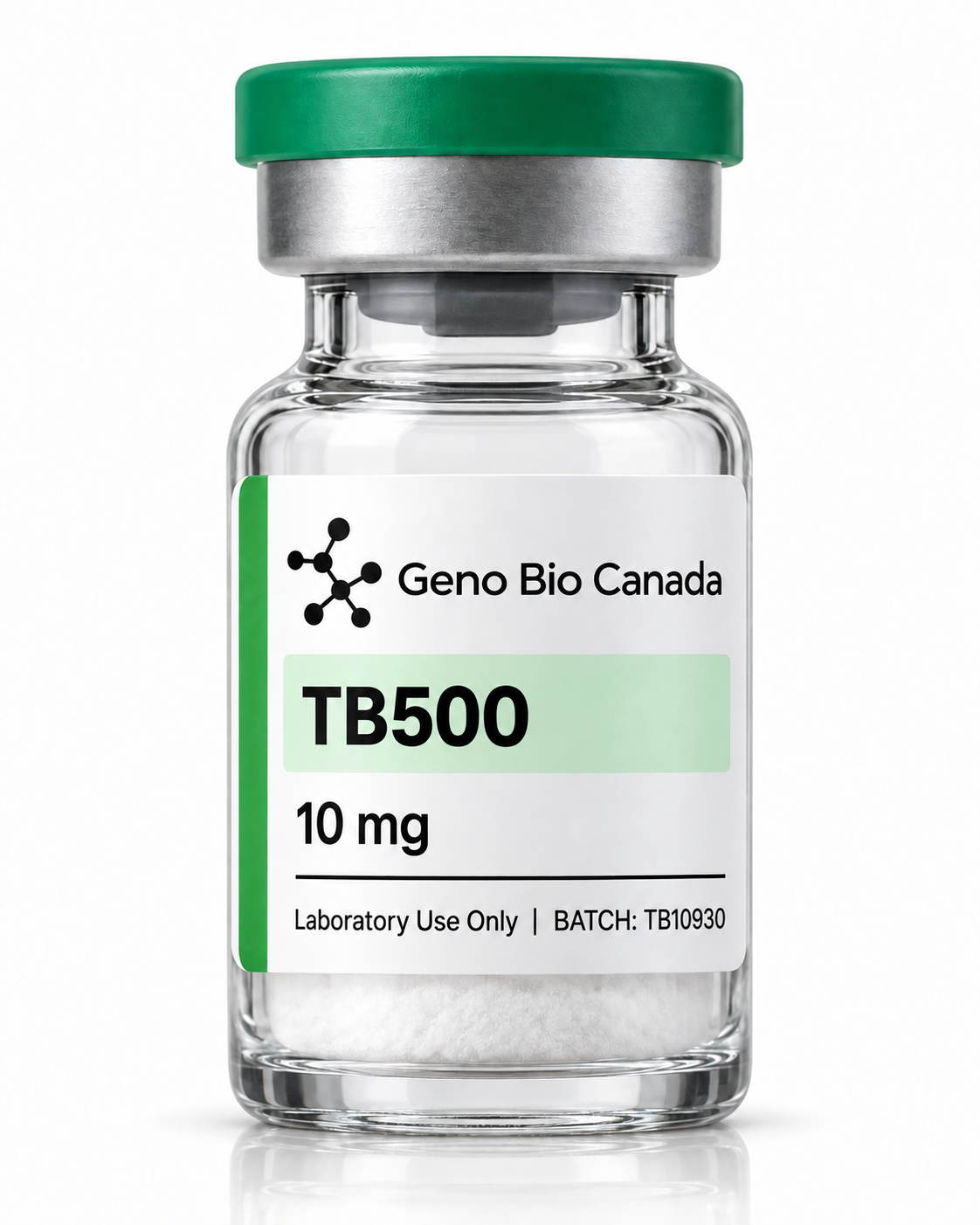
The result is a porous solid with low residual moisture, often referred to as the cake.
Mechanism of Action
What a Normal Lyophilized Peptide Looks Like
When to Ask Questions
Contact the supplier if you see:
How Shelf Life Is Set
Shelf life is based on stability studies. Samples are stored under defined temperature and humidity conditions and tested at set time points. The approach is described in the ICH Q1A(R2) stability guideline.
Check the Batch
The appearance and storage conditions for your batch are listed on its Certificate of Analysis. Check any Geno Bio Canada lot on the Certificates page.
Related reading: Peptide Storage and Stability.
Geno Bio Canada products are sold for laboratory research use only and are not for human or animal consumption.
Key Study Highlights
Freeze-dried for stability
Removing water slows peptide degradation.
Three stages
Freezing, primary drying and secondary drying.
Appearance varies
A cake, powder or thin film can all be normal.
Shelf life from data
Set by stability studies under controlled conditions.
Scientific FAQs
References
- International Council for Harmonisation (2003).ICH Q1A(R2) Stability Testing of New Drug Substances and ProductsICH Guideline
- U.S. Food and Drug Administration (2004).Sterile Drug Products Produced by Aseptic Processing: Current Good Manufacturing PracticeFDA Guidance for Industry
- World Health Organization (2011).Model Guidance for the Storage and Transport of Time and Temperature Sensitive Pharmaceutical ProductsWHO Technical Report Series 961, Annex 9
Procure Research Reference Materials
Access laboratory-grade reference compounds with verified batch HPLC purity reports and sterility documentation.
View Compound SpecificationsRelated Peptides
Retatrutide 40mg
Retatrutide 40mg by Geno Bio is an investigational research peptide supplied in lyophilized form for laboratory and analytical research applications. Retatrutide is a synthetic peptide designed to interact with glucagon-like peptide-1 (GLP-1), glucose-dependent insulinotropic polypeptide (GIP), and glucagon receptor pathways.
View Tech SheetSelank 10mg
Selank 10mg by Geno Bio is a synthetic research peptide supplied in lyophilized form for controlled laboratory and analytical applications. Investigated for neurochemical signaling pathways.
View Tech SheetBPC-157 10mg
BPC-157 10mg by Geno Bio is a synthetic research peptide supplied in lyophilized form for laboratory and analytical research applications. Studied in tissue-response and vascular signaling preclinical research.
View Tech SheetLiterature Inquiries
Have questions about the pre-clinical citations or chemical parameters detailed in this research? Connect with our analytical representatives.