Glutathione: Intracellular Redox Balance, Free Radical Scavenging & Phase II Detoxification
“Glutathione (gamma-L-glutamyl-L-cysteinylglycine / GSH) is the master non-enzymatic intracellular antioxidant, maintaining cellular thiol redox status, eliminating reactive oxygen and nitrogen species, protecting mitochondrial DNA, and conjugating toxic electrophiles via Phase II GST pathways.”
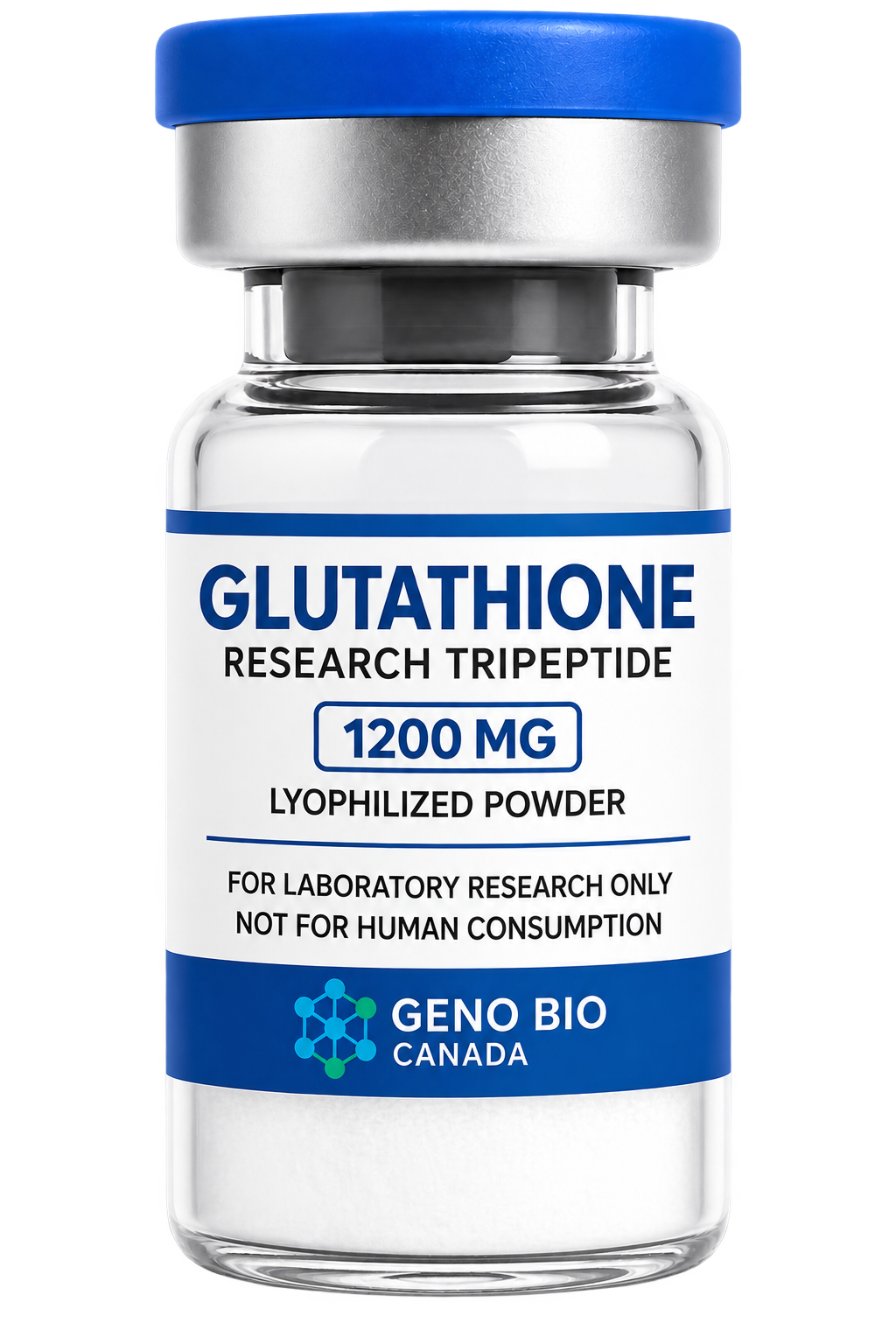
Legal & Laboratory Compliance Notice
FOR IN-VITRO LABORATORY RESEARCH ONLY: This scientific publication is provided strictly for academic and biochemical reference by certified researchers. Materials and compounds referenced are NOT for human consumption, veterinary use, drug manufacture, or direct clinical administration. Statements have not been evaluated by Health Canada or the FDA.
Scientific Research Overview
Abstract & Executive Summary
Glutathione (GSH) is a ubiquitous intracellular tripeptide composed of glutamate, cysteine, and glycine. Unlike standard ribosomal peptides, glutathione contains an atypical isopeptide bond between the gamma-carboxyl group of the glutamate side chain and the alpha-amino group of cysteine (gamma-L-glutamyl-L-cysteinylglycine, MW: 307.32 Da).
This gamma-glutamyl linkage is impervious to cleavage by intracellular aminopeptidases, ensuring that GSH remains stable inside the cell. It can only be cleaved by the membrane-bound ectoenzyme Gamma-Glutamyl Transferase (GGT) located on the external plasma membrane.
+----------------------------------------------------------------------------------------------------+
|                                    GLUTATHIONE REDOX & DETOX CYCLE                                 |
+------------------------------------+----------------------------------+-----------------------------+
| Radical Neutralization (GSH -> GSSG)| Enzymatic Recycling (GSSG -> GSH)| Phase II Detoxification    |
| - Donates H+ from cysteine -SH     | - Glutathione Reductase (GR)     | - Glutathione S-Transferase |
| - Quenches •OH, O2•-, peroxides    | - Consumes NADPH from PPP        | - Electrophile conjugation  |
| - Protects mtDNA from oxidation    | - Maintains GSH/GSSG ratio > 100 | - Mercapturic acid pathway  |
+------------------------------------+----------------------------------+-----------------------------+
The GSH/GSSG Redox Index
Under physiological resting conditions:
Mechanism of Action
Glutathione exerts its cellular protective actions via three main enzymatic and chemical pathways:
1. Direct Free Radical Scavenging & Peroxidase Catalysis
The active nucleophile of glutathione is the sulfhydryl (-SH) thiol group on the central cysteine residue:
2 GSH + H2O2 —(GPx)—> GSSG + 2 H2O
2. Glutathione Reductase & NADPH-Dependent Regeneration
To maintain high intracellular GSH levels, oxidized GSSG is recycled:
GSSG + NADPH + H+ —(GR)—> 2 GSH + NADP+
3. Phase II Xenobiotic Detoxification (GST Conjugation)
In the liver and kidneys, Glutathione S-Transferases (GSTs) catalyze the nucleophilic attack of the GSH thiol on hydrophobic, electrophilic toxins, carcinogens, and drugs (e.g., acetaminophen metabolites / NAPQI):
4. S-Glutathionylation & Redox Signaling
Under transient oxidative shifts, GSH forms mixed disulfides with critical cysteine residues on target proteins (S-glutathionylation), temporarily protecting them from irreversible oxidative carbonylation and modulating signaling kinases (e.g., NF-κB, PTP1B).
Key Study Highlights
Universal Thiol Antioxidant
Primary non-enzymatic defense maintaining intracellular and mitochondrial redox balance.
Phase II Hepatic Conjugation
Mandatory substrate for GST-catalyzed neutralisation and excretion of electrophilic xenobiotics.
Mitochondrial Genome Protection
Guards mtDNA and mitochondrial Complex I/III enzymes against ROS-mediated lipid peroxidation.
Isopeptide Peptidase Resistance
Gamma-glutamyl linkage confers intrinsic resistance to intracellular degradation.
Scientific FAQs
References
- Forman H.J. et al (2009).Glutathione: overview of its protective roles, measurement, and biosynthesisMol Aspects Med, 30(1-2):1-12
- Marí M. et al (2013).Mitochondrial glutathione in cell survival and deathJ Clin Biochem Nutr, 54(1):17-26
Procure Research Reference Materials
Access laboratory-grade reference compounds with verified batch HPLC purity reports and sterility documentation.
View Compound SpecificationsLiterature Inquiries
Have questions about the pre-clinical citations or chemical parameters detailed in this research? Connect with our analytical representatives.