CJC-1295 (Mod GRF 1-29): Pulsatile Somatotropic Axis Activation & GH Secretion Kinetics
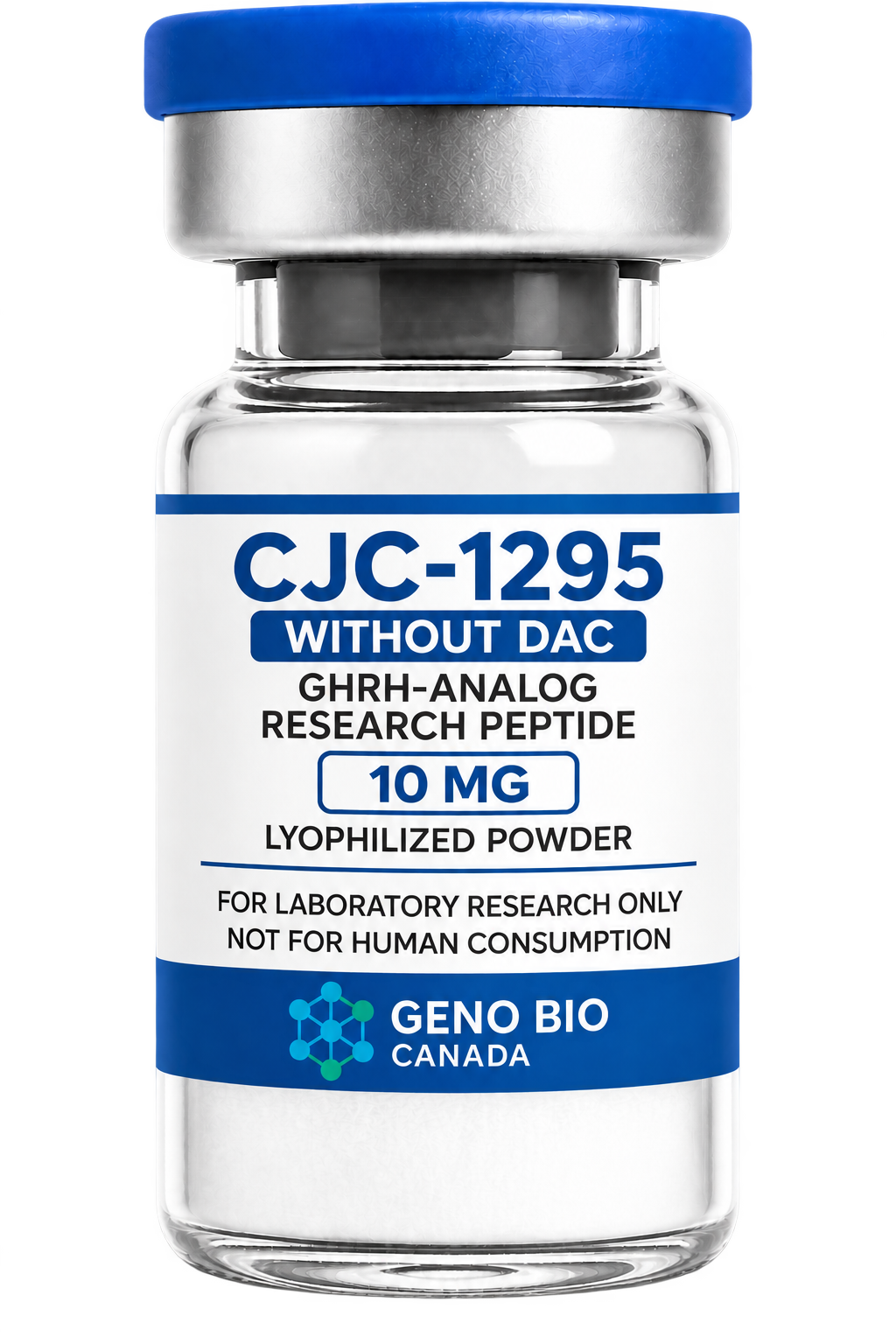
“CJC-1295 without DAC (Modified GRF 1-29) is a tetrasubstituted 29-amino-acid synthetic secretagogue engineered to activate pituitary GHRH receptors, stimulating physiological, pulsatile growth hormone surges with optimal receptor recovery kinetics.”
Legal & Laboratory Compliance Notice
FOR IN-VITRO LABORATORY RESEARCH ONLY: This scientific publication is provided strictly for academic and biochemical reference by certified researchers. Materials and compounds referenced are NOT for human consumption, veterinary use, drug manufacture, or direct clinical administration. Statements have not been evaluated by Health Canada or the FDA.
Scientific Research Overview
Abstract & Executive Summary
Growth Hormone-Releasing Hormone (GHRH) is the hypothalamic master peptide responsible for stimulating the production and pulsatile secretion of growth hormone. The biological activity of native GHRH resides entirely within its first 29 amino acids, GHRH(1-29)NH2 (Sermorelin). However, Sermorelin suffers from an extremely short in-vivo half-life (< 10 minutes) due to rapid DPP-4 enzymatic cleavage at the Ala2 position, deamidation at Asn8, and methionine oxidation at Met27.
Modified GRF 1-29 (commonly referred to in laboratory literature as CJC-1295 without DAC) solves these biochemical vulnerabilities through four strategic substitutions, yielding a stable 29-amino-acid peptide with an extended ~30-minute half-life that matches the natural human somatotropic pulse duration.
+----------------------------------------------------------------------------------------------------+
|                                 CJC-1295 TETRASUBSTITUTED BIOCHEMISTRY                             |
+------------------------------------+----------------------------------+-----------------------------+
| Substitution Position             | Chemical Modification            | Biochemical Consequence     |
+------------------------------------+----------------------------------+-----------------------------+
| Position 2                         | D-Alanine (D-Ala2)               | Completely blocks DPP-4     |
| Position 8                         | Glutamine (Gln8)                 | Prevents Asn deamidation    |
| Position 15                        | D-Alanine (D-Ala15)              | Enhances alpha-helicity     |
| Position 27                        | Leucine (Leu27)                  | Eliminates Met oxidation    |
+------------------------------------+----------------------------------+-----------------------------+
Chemical Structure & Sequence Architecture
Tyr-D-Ala-Asp-Ala-Ile-Phe-Thr-Gln-Ser-Tyr-Arg-Lys-Val-Leu-Ala-Gln-Leu-Ser-Ala-Arg-Lys-Leu-Leu-Gln-Asp-Ile-Leu-Ser-Arg-NH2Mechanism of Action
CJC-1295 (Mod GRF 1-29) functions as a potent selective agonist at the anterior pituitary GHRH receptor:
1. Pituitary GHRH Receptor Engagement
Mod GRF 1-29 binds with nanomolar affinity to the GHRH-R on pituitary somatotrophs:
2. Epac & Calcium-Dependent Granule Exocytosis
PKA and Epac signaling cascades phosphorylate voltage-gated L-type calcium channels, causing influx of extracellular Ca2+:
3. Synergistic Co-Activation with GHRPs (Ghrelin Agonists)
In multi-secretagogue research models, combining CJC-1295 (targeting GHRH-R) with a Growth Hormone Releasing Peptide (GHRP, such as Ipamorelin, targeting the GHS-R1a receptor) produces an exponential, synergistic GH surge:
4. Receptor Cycling & Absence of Tachyphylaxis
Because Mod GRF 1-29 (w/o DAC) has a finite biological half-life (~30 minutes), somatotroph receptors return to baseline between pulses, avoiding the receptor internalization, desensitization, or down-regulation seen with continuous agonists.
Key Study Highlights
Tetrasubstituted Stability
D-Ala2, Gln8, D-Ala15, and Leu27 substitutions block DPP-4 and oxidative breakdown.
Pulsatile Secretion Kinetics
Generates sharp, physiological growth hormone pulses matching circadian somatotropic rhythms.
GHRP / GHS-R1a Synergy
Produces exponential, synergistic GH surges when co-incubated with ghrelin mimetics.
Receptor Sensitivity Preservation
Avoids pituitary receptor tachyphylaxis and preserves negative feedback control.
Scientific FAQs
References
- Teichman S.L. et al (2006).Prolonged stimulation of GH and IGF-I by CJC-1295J Clin Endocrinol Metab, 91(3):799-805
- Izdebski J. et al (2002).Structure-activity relationships of GHRH analogsJ Pept Sci, 8(6):289-296
Procure Research Reference Materials
Access laboratory-grade reference compounds with verified batch HPLC purity reports and sterility documentation.
View Compound SpecificationsLiterature Inquiries
Have questions about the pre-clinical citations or chemical parameters detailed in this research? Connect with our analytical representatives.